Anatomy of a Dropout: Why Your Togala XT-18 Might Fail (And How to Fix It)
Update on Dec. 18, 2025, 11:38 a.m.
Reviewer FARI noted the microphone output is “poor… muffled,” and Paris experienced “random disconnects.” W. DEMOYA simply “couldn’t get them to charge.”
These are not random defects; they are the predictable symptoms of Entropy attacking budget micro-electronics. Unlike premium devices with robust error-correction and high-grade materials, the Togala XT-18 operates closer to the edge of physical tolerances. Here is why they fail and how you can fight back.
H4 The Muffled Mic Mystery: MEMS and Math
The complaint of “muffled” audio is a classic trade-off in budget TWS design. The XT-18 likely uses a single MEMS (Micro-Electro-Mechanical Systems) microphone per earbud. This microscopic sensor is located far from your mouth, near your ear.
To pick up your voice, the DSP must boost the gain significantly. However, this also boosts background noise. To compensate, a Noise Suppression Algorithm aggressively cuts frequencies it deems “noise” (Thesis). Often, parts of your speech fall into these cut bands, resulting in a robotic or underwater sound.
Furthermore, the microphone port is a tiny pinhole. It is a magnet for skin oils and pocket lint. A blockage as thin as a human hair can drop the input volume by 20dB.
Field Note: Use a soft-bristled toothbrush (dry) to gently sweep the microphone hole. Even invisible debris can cause the “muffled” effect. Also, try switching to mono mode and holding one earbud closer to your mouth for critical calls.
H4 The Physics of Connection Drops
Bluetooth 2.4GHz waves are notorious for being absorbed by water. The human body is mostly water. This creates Cross-Body Interference.
If your phone is in your back left pocket and the “Master” earbud (the one handling the connection) is in your right ear, the signal must travel through your torso. At the low transmission power of budget chips, this mass of water creates a “RF Shadow,” leading to the dropouts Paris described.
So What?: The fix is physics, not firmware. Move your phone to a front pocket or an armband on the same side as the Master earbud to establish a clearer Line-of-Sight (LOS) for the radio waves.
H4 The “Dead Earbud” Syndrome: Galvanic Corrosion
When W. DEMOYA couldn’t get them to charge, the culprit was likely chemistry. The charging pads on the earbuds are gold-plated, but in budget devices, this plating is thin.
After a workout, sweat (an electrolyte) sits on these pads. When you drop the earbud into the case, the 5V charging current flows through the sweat, triggering Galvanic Corrosion (Physics). This creates a non-conductive oxide layer (black or green gunk) that insulates the pin from the pad. The case thinks the slot is empty, and the earbud dies a slow death.
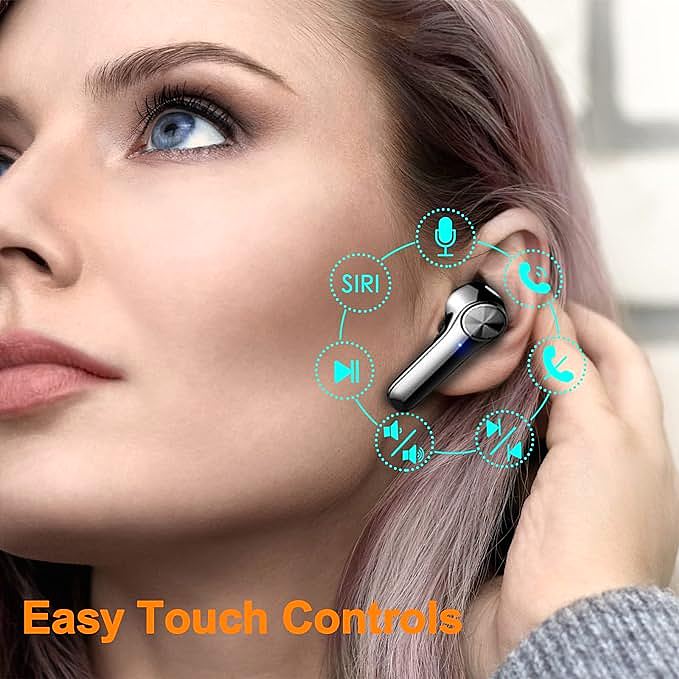
H4 Touch Control Ghosts
Capacitive touch sensors detect changes in electrical fields. Water is conductive. If you have wet hair or sweat dripping onto the touch panel, the sensor can register “ghost touches,” pausing your music or triggering Siri unexpectedly. This is an inherent limitation of capacitive technology in wet environments.
Field Note: If the controls are acting erratic during a sweaty run, wipe the surface of the earbuds with a dry cloth. The sensor needs a dielectric contrast (finger vs. air) to work, not a conductive bridge (water).
The Togala XT-18 is a capable device, but it lacks the error-correction margins of a $200 product. Understanding these physical limitations allows you to mitigate them—cleaning contacts, positioning your phone correctly—and squeeze every drop of value out of your investment.


