The "Domesticated" ASIC: Deconstructing the Tech of Quiet, 800W Home Bitcoin Miners
Update on Nov. 9, 2025, 9:10 a.m.
For nearly a decade, “home Bitcoin mining” has been an oxymoron. The industrial-grade ASIC (Application-Specific Integrated Circuit) miners that secure the network are notoriously hostile to a residential environment. They are defined by two things: a screaming 80-100dB noise level (like a vacuum cleaner) and a massive power draw (3000W+) that requires a 240V electrician-installed circuit.
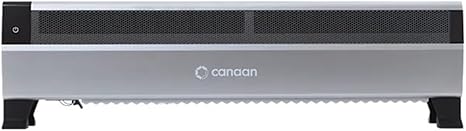
This has locked hobbyists out of the market. But a new class of “domesticated” ASICs is emerging, engineered specifically to solve these two problems. The Canaan Avalon Mini 3 is a perfect technical case study for this new category.
This is not an analysis of profitability, which is volatile and depends on market prices. This is a deconstruction of the engineering that makes at-home mining viable for a “prosumer” or hobbyist, and the specific trade-offs involved.
1. Solving the Domestic Problem: Noise and Power
The most revolutionary specs of this device are not its hashrate, but its environmental numbers.
The Power Spec: 800W (110V Compatible)
This is the most critical feature for a US-based home user. An 800-watt power draw is comfortably, and safely, supported by a standard 110V/15A household circuit, which is typically rated for a continuous load of around 1500W. This means no special wiring, no electrician, and no risk of tripping breakers. It’s a “plug-and-play” power level, similar to a high-end gaming PC.
The Noise Spec: 35-55 dB
An industrial miner at 85dB is painfully loud. A “domesticated” miner at 35-55 dB is a game-changer.
* 35 dB (at 500W “Heater mode”): This is whisper-quiet, on par with a library.
* 55 dB (at 800W full load): This is the level of a quiet conversation or a modern refrigerator.
This spec is the difference between a machine that must be exiled to a soundproofed garage and one that can sit in a home office without being a nuisance.
The “Heater Mode” Reframe
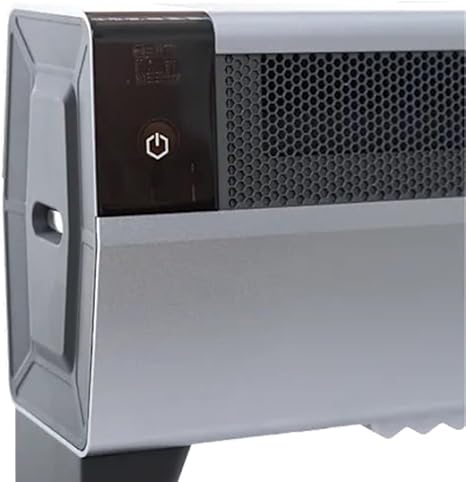
The product documentation explicitly re-frames the machine’s primary “waste product”—heat—as a “feature.” It is an 800-watt electric space heater. The manufacturer notes it can raise a 10-cubic-meter room’s temperature from 15°C to 21°C (59°F to 70°F) in about 10 minutes.
This is a key part of the “prosumer” value proposition. Instead of “wasting” 800W, a user in a cold climate can “dual-purpose” the machine, using it to heat a room while it simultaneously generates revenue.
2. The Core Tech: How 4nm Enables Efficiency
The low power and noise are only possible because of extreme efficiency. This is where the core tech specs come in.
Hashrate: 37.5 TH/s
This is the machine’s “horsepower.” It means the device can perform 37.5 trillion SHA-256 calculations (hashes) per second in the “lottery” to find the next Bitcoin block. A user review notes it reliably hits “35.7 to 40 th/s.” While a fraction of industrial-scale miners (which now exceed 300 TH/s), it is a substantial amount of hashpower for a home unit.
Efficiency: 21.3 J/TH (The “MPG” Rating)
This is the single most important number for any miner’s long-term viability. It stands for Joules per Terahash. It’s the “miles-per-gallon” rating of the miner.
* It means that to produce 1 Terahash of “horsepower,” this machine consumes 21.3 Joules of electricity per second.
* A lower J/TH number is always better.
* This 21.3 J/TH figure is exceptionally competitive, rivaling many full-scale industrial miners. Older ASICs (from 3-5 years ago) ran at 50-100 J/TH and are now largely unprofitable because they burn too much power for the hashes they produce.
The Enabler: 66 Chips, 4-nanometer Process
This efficiency is achieved through its 4-nanometer (4nm) chips. The “nanometer” refers to the size of the transistors on the chip. Smaller transistors are more power-efficient. By using a cutting-edge 4nm process, the 66 ASIC chips in this machine can perform more calculations using less electricity, which in turn produces less heat and requires less (and quieter) air cooling. The high efficiency (21.3 J/TH) is a direct result of the 4nm silicon.
3. The Hobbyist’s Reality: Risks and Strategy
This is a “prosumer” device, and it carries “prosumer” risks. The seller’s “Important Note” is not a suggestion; it’s a critical warning.
The “No Returns” Policy
The seller states: “due to the product’s special nature… in principle, we do not accept returns” and will charge a 30% return fee if an exception is made. This is standard for the ASIC market. These are not consumer electronics. They are high-risk, high-depreciation assets. Their revenue is tied to the volatile price of cryptocurrency and the ever-increasing total network hashrate (difficulty).
Pool vs. “Solo” Mining
The product mentions “Solo Mining.” For a 37.5 TH/s machine, this is not a viable strategy. The total Bitcoin network hashrate is over 600,000,000 TH/s. The odds of this single machine finding a block on its own are astronomically low.
The only logical method for this device is “Pool Mining,” as the user review confirms (“on Braiins pool”). In a pool, you combine your 37.5 TH/s with thousands of other miners. When the pool finds a block, the reward is split among all members based on their contributed hashrate. This provides small, consistent, daily payouts instead of a one-in-a-million lottery ticket.
Conclusion: A Tool for the Serious Hobbyist
The Canaan Avalon Mini 3 is not a “get rich quick” machine. It is a finely engineered tool that represents a new “domesticated” class of ASICs. It solves the two problems that killed home mining: unbearable noise and industrial-scale power requirements.
With its 800W draw and 35-55dB noise level, it’s a device that can be integrated into a home office or “home lab.” It’s for the hobbyist who wants to participate in the Bitcoin network, the tinkerer who loves technology, or the prosumer who wants a “dual-purpose” 800W space heater that also happens to pay them back in BTC.


